Even though most breast lumps are not cancer, it’s important to get them checked.
If you find a breast lump, it could be one of these benign (non cancerous) conditions below.
Even though most breast lumps are not cancer, it’s important to get them checked.
If you find a breast lump, it could be one of these benign (non cancerous) conditions below.
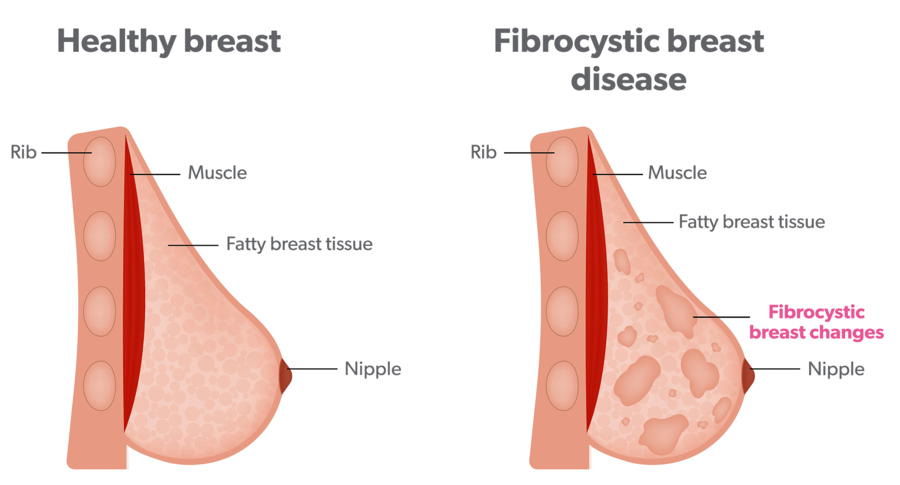
Fibrocystic change is the most common cause of breast lumps in women aged 30–50. It happens when breast tissue responds to normal changes in hormone levels.
Your breasts may feel lumpy, tender or achy, and these changes can vary during your menstrual cycle. You may also notice a green or brown nipple discharge that happens without squeezing.
Mild discomfort from fibrocystic breast changes usually don’t need treatment. If you have moderate discomfort, a well-fitting, supportive bra and pain relief such as paracetamol may help. If a larger cyst is causing significant pain, a doctor may drain the fluid using a needle and syringe. This is called aspiration.
Fibrocystic changes do not increase your risk of developing breast cancer.
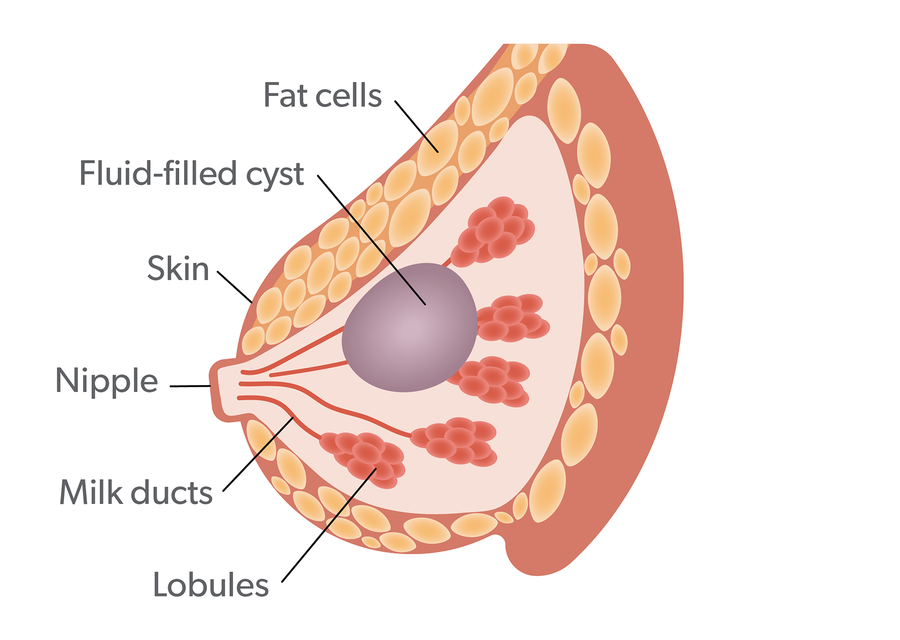
Breast cysts are fluid-filled sacs. You may have a single cyst or several, and they could be different sizes.
They are most common in people over 35 and before menopause, although they can also occur after menopause in people taking menopausal hormone therapy (MHT, also called hormone replacement therapy or HRT).
An ultrasound is usually needed to confirm whether the lump is solid or cystic (fluid-filled), since this often can’t be told from examination alone. Sometimes a biopsy may also be recommended.
Simple breast cysts often do not need treatment. If a cyst is very uncomfortable, it may be drained by a doctor to relieve pain. It’s common for breast cysts to come and go, decrease, refill, or return.
A sebaceous cyst is a lump that develops in the skin rather than within the breast tissue. These cysts can occur anywhere in the body and are also common on the skin of the breast.
They don’t always need treatment. If a cyst keeps coming back, becomes infected, or is bothering you, it may be removed with a minor surgical procedure.
A hamartoma is a non-cancerous lump made up of normal breast tissue, such as fatty, glandular and fibrous tissue. It is usually soft and painless.
Hamartomas are often found on a mammogram. Other tests, such as a biopsy, may sometimes be needed to confirm what the lump is.
A lipoma is a non-cancerous lump made up of fatty tissue. Lipomas can develop in many parts of the body, including the breast.
They are usually soft, painless and can move slightly when pressed. They don’t usually need treatment, although removal may be considered if a lipoma is causing problems or getting bigger.
Fat necrosis happens when fatty tissue in the breast is damaged. This can happen after an injury, breast surgery, radiation therapy, or being on blood thinning medication.
It may cause a lump or show up on a mammogram or ultrasound. Fat necrosis can sometimes look similar to breast cancer on a mammogram, so you may need a biopsy to confirm what it is.
Fat necrosis is non-cancerous and usually doesn’t need treatment.
Fibroadenomas are common, non-cancerous breast lumps. They are more common in younger women. Fibroadenomas can change in size in response to hormones, and you may have more than one.
If a fibroadenoma is suspected, you may need a biopsy to confirm what the lump is.
Most fibroadenomas don’t need treatment and may get smaller over time. If yours gets bigger, becomes painful or is causing you concern, talk to a GP about it. You may get a referral to a breast specialist to get it removed.
If you’ve got questions about your breast health, our specialist breast nurses are here to help.