
Breast density. Every woman deserves to know
KNOW YOUR DENSITY. KNOW YOUR RISK.
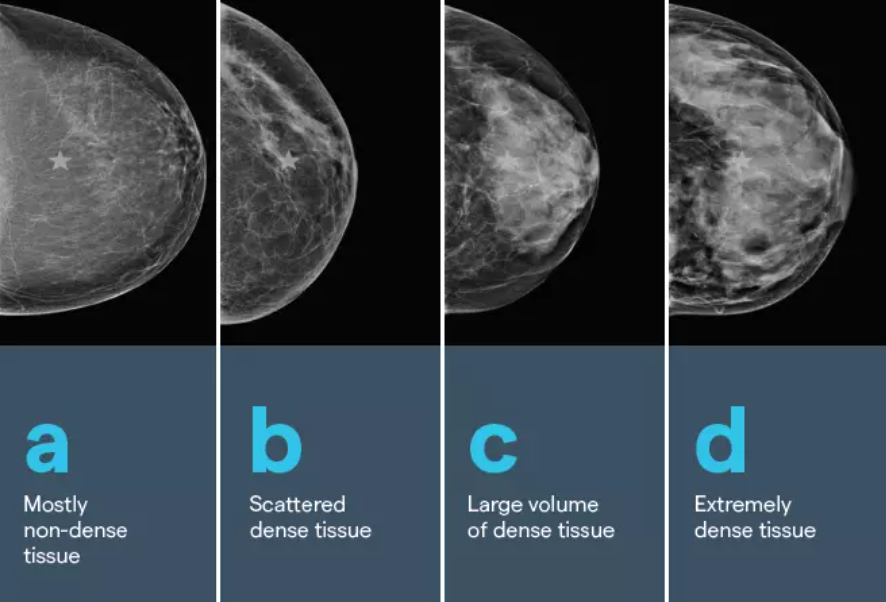
Around 1 in 10 women who have a mammogram have extremely dense breasts. Dense tissue shows up white on a mammogram, and so do tumours, so cancers can be hidden from view.
Yet most women in New Zealand are never told their breast density. Without that information, they can’t talk to their doctor about their risk or ask whether extra imaging is right for them.
Breast density is a significant issue, and women across the country have shared their stories of cancers found late. Many are calling for density reporting to start now. Under the Cancer Action Plan, density reporting won’t be reviewed until 2028.
Julie Haines knows what’s at stake. Her mammogram missed a 1cm tumour, and it was only found because a specialist knew about her dense breasts and advised her to have ultrasounds. Caught early, Julie is now cancer free. She wants every woman to have the same chance, so she has started a petition to Parliament.
Julie’s petition asks Parliament to require breast density reporting and to provide alternative imaging and screening for women who need it. Telling women their density, and funding extra imaging for high-risk women, is one of the three asks in our 2026 Election Manifesto.
Add your name and help make sure no woman is left in the dark.
Forbidden Pharmacy

UNLOCK THE MEDICINES NEW ZEALAND NEEDS.
Thousands of Kiwis are waiting for medicines they may never receive. Not because the medicines don’t exist. Not because they don’t work. Because New Zealand hasn't funded them.
Hundreds of medicines available in Australia, the UK and other countries remain out of reach for New Zealanders. It’s enough to fill an entire pharmacy. So that’s what we did.
Our open letter has been delivered
On September 22 2026, we delivered our open letter to political leaders from six parties: Act, Greens, Labour, Opportunity, National and New Zealand First. More than 12,000 New Zealanders signed it, calling on politicians and decision makers to fund the medicines more than 600,000 New Zealanders need. Thank you to everyone who added their name.
Where the parties stand
We asked seven political parties the same three questions:
- Will you fund the medicines Pharmac has recommended through its Options for Investment list?
- Will you commit to a long-term plan to bring New Zealand’s medicines investment into line with OECD norms?
- What other policies would you put in place to improve medicines access?
Six parties responded. Every response is published in full, exactly as we received it.
September polling by Talbot Mills Research found 82% of New Zealanders think funding Pharmac-recommended medicines is important, and 85% want a long-term plan. Support was high among voters of every party.
Extending free mammograms to 74

In 2016, BCFNZ first presented evidence to the Health Select Committee to support raising the free mammogram age from 69 to 74, sharing the voices of vivacious older women, all diagnosed with breast cancer over 69.
Thanks to sustained advocacy for more than eight years, in 2024 the Government announced the roll out of age extension to 74.
Since the pilot began in Nelson-Marlborough, and the nationwide roll out in 2025, more than 190 breast cancers have been found in women aged 70-74 (as of June 2026).
This is a significant achievement, which couldn't have happened without your support. You can read about the impact of age extension below.

Access to healthcare should never depend on where you live or what you can afford.
Yet many people with breast cancer face significant travel and accommodation costs to receive specialist care, creating financial pressure that can delay or disrupt treatment and deepen existing inequities.
Breast Cancer Foundation NZ is part of a coalition of more than 30 health organisations advocating for improvements to the National Travel Assistance Scheme. Together, we are working to remove financial barriers to care by ensuring the scheme remains accessible, adequately funded and responsive to the real costs of travelling for treatment. Because everyone deserves the same opportunity to receive timely, life-saving healthcare, regardless of their postcode.
Medicine funding

New Zealand spends just 0.4% of GDP on medicines, compared to an OECD average of 1.4%. We spend just 4.9% of health spend on medicines, compared to an OECD average of 13.3%
By either measure, we are genuine outliers. The worst performers against comparable countries. And that gap is measured in lives cut short, financial hardship and devastating impacts for families and communities.
In October 2024, Keytruda (pembrolizumab) became funded for advanced triple negative breast cancer (TNBC). Breast Cancer Foundation had advocated for Keytruda for many years - acknowledging this agressive subtype of cancer had no other treatment options. Now, we need to see it funded for early stage TNBC where evidence shows it can reduce the risk of recurrence by 32%. There is currently a petition signed by 17,096 New Zealanders calling for Keytruda to be funded for early-stage TNBC. Catherine Cooke presented an oral submission to the health select committee on 22 July 2026 about the vital need for this medicine. You can watch it here.
In January 2025, Enhertu (trastuzumab deruxtecan) was funded for advanced HER2 positive breast cancer. This vital life-extending medicine is now allowing more New Zealanders and their families precious time and memories while living with breast cancer. But there's more work to do. It remains unfunded for advanced HER2-low breast cancer despite significant evidence it extends time without progression of breast cancer.
Read more about the gap between medicines funding in Australia and New Zealand